

Tetrabromophenol Blue CAS 4430-25-5
Identification
CAS Number
4430-25-5
Name
Tetrabromophenol Blue
Synonyms
4,4′-(4,5,6,7-tetrabrom-1,1-dioxido-3h-2,1-benzoxathiol-3,3-diyl)bis(2,6-dibrombenzolol)
4,4′-(4,5,6,7-Tetrabrom-1,1-dioxido-3H-2,1-benzoxathiol-3,3-diyl)bis(2,6-dibromphenol)
4,4′-(4,5,6,7-Tetrabromo-1,1-dioxido-3H-2,1-benzoxathiole-3,3-diyl)bis(2,6-dibromophenol)
4,4′-(4,5,6,7-Tétrabromo-1,1-dioxydo-3H-2,1-benzoxathiole-3,3-diyl)bis(2,6-dibromophénol)
Phenol, 4,4′-(4,5,6,7-tetrabromo-1,1-dioxido-3H-2,1-benzoxathiol-3-ylidene)bis[2,6-dibromo-
4,4′-(4,5,6,7-tetrabromo-3h-2,1-benzoxathiol-3-ylidene)bis(2,6-dibromophenol) s,s-dioxide
3,3′,3”,4,5,5′,5”,6-Octabromophenolsulfonphthalein
3′,3”,5′,5”-Tetrabromophenol-4,5,6,7-tetrabromosulfonephthalein
3,3-bis(3,5-dibromo-4-hydroxyphenyl)-4,5,6,7-tetrabromobenzo[c]1,2-oxathiolene -1,1-dione
3,3-bis(3,5-dibromo-4-hydroxyphenyl)-4,5,6,7-tetrabromobenzo[c]1,2-oxathiolene-1,1-dione
3,4,5,6,3′,5′,3”,5”-Octabromophenolsulfonphthalein
4,4′-(4,5,6,7-Tetrabromo-3H-2,1-benzoxathiol-3-ylidene)bis(2,6-dibromophenol) S,S-dioxide
4,4′-(4,5,6,7-tetrabromo-3H-2,1-benzoxathiol-3-ylidene)bis[2,6-dibromophenol] S,S-dioxide
4,5,6,7-Tetrabromo-3,3-bis(3,5-dibromo-4-hydroxyphenyl)-2,1λ6-benzoxathiole-1,1(3H)-dione
4,5,6,7-Tetrabromo-3,3-bis(3,5-dibromo-4-hydroxyphenyl)-3H-benzo[c][1,2]oxathiole 1,1-dioxide
4,5,6,7-Tetrabromo-3,3-bis(3,5-dibromo-4-hydroxy-phenyl)-3H-benzo[c][1,2]oxathiole 1,1-dioxide
Benzenesulfonic acid, 2-(bis(3,5-dibromo-4-hydroxyphenyl)hydroxymethyl)-3,4,5,6-tetrabromo- (9CI)
Tetrabromophenol blue
Tetrabromophenyl blue
Tetrabromphenol tetrabromsulfonphthalein
Molecular Structure

SMILES
C1=C(C=C(C(=C1Br)O)Br)C2(C3=C(C(=C(C(=C3Br)Br)Br)Br)S(=O)(=O)O2)C4=CC(=C(C(=C4)Br)O)Br
StdInChI
InChI=1S/C19H6Br8O5S/c20-7-1-5(2-8(21)16(7)28)19(6-3-9(22)17(29)10(23)4-6)11-12(24)13(25)14(26)15(27)18(11)33(30,31)32-19/h1-4,28-29H
StdInChIKey
QPMIVFWZGPTDPN-UHFFFAOYSA-N
Molecular Formula
C19H6Br8O5S
Molecular Weight
985.54
EINECS
224-622-9
MDL Number
MFCD00005876
Beilstein Registry Number
378438
Properties
Appearance
Yellow or brown powder
Melting Point
203-205 ºC
Safety Data
Personal Protective Equipment
Eyeshields, Gloves, type N95 (US), type P1 (EN143) respirator filter
WGK Germany
3
Specifications and Other Information of Our Tetrabromophenol Blue CAS 4430-25-5
Identification Methods
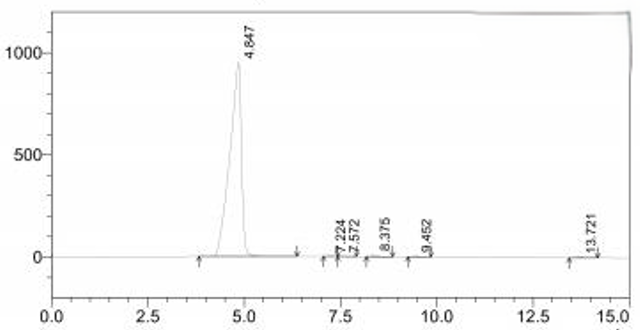
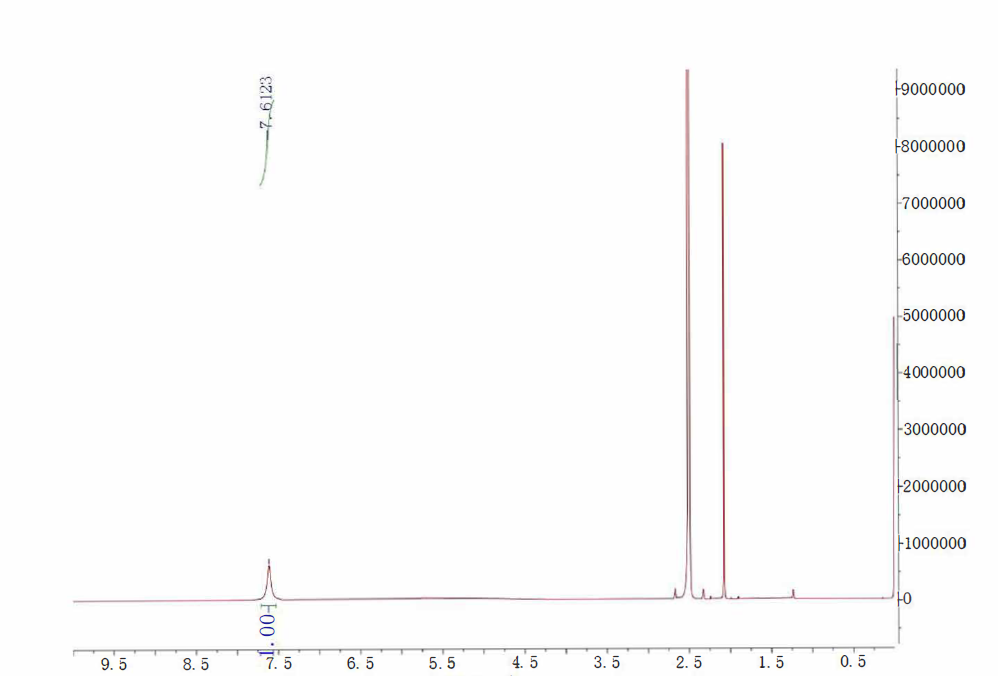
HNMR,HPLC
Purity
97% min
Loss on Drying
1.0% max
Water
1.0% max
Ash
1.0% max
Bromide
5.0% max
Iodide
0.1% max
Pb
20ppm max
Hg
1ppm max
AS
3ppm max
Fe
100ppm max
Solvent Residue
0.1ppm max
Storage
Store in a cool(2-8 °C) and dry place, and away from light
Application
Applications of analytical chemistry and biotechnology
pH Indicator
Color change range: around pH 3.0 – 4.6
Color shift:
Acidic: Yellow
Alkaline: Blue
Application: Often used in titrations and buffer systems for acidic pH detection.
Protein Detection (Electrophoresis and Staining)
Acts as a tracking dye during SDS-PAGE or agarose gel electrophoresis to monitor the progress of protein migration.
Used as a staining agent for proteins on membranes (e.g., nitrocellulose or PVDF) in colorimetric detection.
Analytical Reagent
Forms complexes with certain compounds (e.g., proteins or surfactants), making it useful in quantitative assays.
Can be used in spectrophotometric methods to measure concentrations of biomolecules or ions.
Biochemical and Diagnostic Kits
May be included in enzyme-linked assays, diagnostic strips, or colorimetric test kits where pH changes or protein levels are indicators.
Application of hair dye
pH-responsive color-changing hair dye (color shift effect)
Since it is a pH indicator, its color changes from yellow to blue depending on the pH level, making it suitable for:
Temporary hair dyes: forming a color layer on the hair surface.
Toy or children’s color-changing hair products: using low-irritation acidic or alkaline systems to create visual effects.
“Color-changing hair” products: for example, changing color during washing, or in response to water, heat, or UV light.
Binding to proteins to color hair
Human hair is primarily composed of keratin, a type of protein.
Tetrabromophenol Blue is commonly used in laboratory experiments to detect proteins, and under certain conditions, it may bind to hair proteins to produce a coloring effect.
General View of Documents
Links
This product is developed by our R&D company Caming Pharmaceutical Limited (http://www.caming.com/).
This product is sold exclusively through our sales company Watson International Limited, and please click the link below for details (https://www.watson-int.com/).


